

Did you know that over one-third of adults struggle with falling or staying asleep nightly, according to recent studies? If restless nights feel like your norm, you’re not alone—and the good news is, you can change that. Sleep meditation tips offer proven ways to quiet your mind, relax your body, and guide you into deep, restorative sleep. In this comprehensive guide, you’ll discover how simple meditation techniques could become your secret weapon for better sleep and greater well-being.
Unlocking Restful Nights: The Surprising Truth About Sleep Meditation Tips
Many people search for a miracle cure when it comes to insomnia or restless nights, but few realize that the answer might be as simple as implementing targeted sleep meditation tips into their nightly routine. Sleep meditation helps quiet the mind, promoting relaxation and easing the transition from wakefulness to sleep. Scientific research shows that certain meditation techniques—like guided meditation, deep breathing, and body scan—can effectively reduce anxiety, lower your heart rate, and calm physical tension, encouraging your body and mind to fall asleep faster and stay asleep longer. By focusing on mindful breathing or a soothing narrative, you teach your body to associate bedtime with tranquility, not stress.
The impact of sleep meditation tips isn’t just psychological. Regular meditation has been linked to improved sleep quality, lower heart rate, and even enhanced mental health outcomes. For beginners and long-time meditators alike, the benefits go well beyond extra sleep—they encompass better mood, less stress, and improved overall health. If you’ve felt stuck in a loop of tossing and turning at night, applying even a few essential sleep meditation techniques could be transformative. Let’s break down the actionable steps you can start using tonight.
What You’ll Learn from These Sleep Meditation Tips
- Understand the science behind sleep meditation tips
- Explore effective meditation technique options to help improve sleep
- Learn guided meditation and mindfulness meditation basics for better rest
- Master deep breathing and body scan routines designed for sleep
- Discover muscle relaxation and mindfulness practice to fall asleep faster

The Science Behind Sleep Meditation Tips: Why Meditation Improves Sleep
Scientific studies have repeatedly shown that sleep meditation directly influences the body’s natural sleep processes. When we meditate, particularly using calming meditation techniques focused on breath or body awareness, we activate the parasympathetic nervous system—sometimes called the “rest and digest” system. This shift lowers heart rate, relaxes muscles, and tells the brain it’s safe to enter sleep mode. In essence, sleep meditation tips train both body and mind to wind down, making falling asleep and staying asleep a natural outcome.
The physiological benefits of meditation for sleep relate to its ability to reduce stress-related hormones such as cortisol, while boosting melatonin, the hormone responsible for sleep cycles. Studies have found that even beginners see improvements in sleep quality after several sessions of guided meditation, body scan, or progressive muscle relaxation. These changes are measurable—lower heart rate, lower blood pressure, and improved markers for mental health—demonstrating that investing a few minutes per night in meditation can yield life-changing results. By understanding this science, you’ll see why meditation isn’t just a bedtime gimmick but a foundational tool for healthy sleep.
As you explore these foundational practices, you might also be interested in how meditation can help you connect with your higher self, deepening your sense of inner peace and self-awareness. For more on this transformative aspect, visit the connect with your higher self resources for practical guidance and inspiration.
| Technique | Main Benefit | Best For | Ease for Beginners |
|---|---|---|---|
| Guided Meditation | Reduces anxiety & mental chatter | Those new to sleep meditation tips | Very Easy |
| Body Scan | Relieves physical tension, calms body and mind | People with tight muscles or stress | Moderate |
| Mindfulness Meditation | Promotes present-moment awareness | Those disturbed by anxious thoughts | Moderate |
| Deep Breathing | Lowers heart rate, triggers relaxation response | Anyone struggling to fall asleep | Very Easy |
| Muscle Relaxation | Reduces tension, helps fall asleep faster | Anyone with restlessness or anxiety | Easy |
Essential Sleep Meditation Tips for Beginners
Starting your journey with sleep meditation tips can feel overwhelming, but simple steps ensure you’re on the right path. First, choosing the best meditation technique for sleep is crucial. For most beginners, guided meditation provides gentle, spoken directions that escort you into a deep state of relaxation. Others may prefer a body scan or deep breathing exercises that focus on muscle relaxation and breath control.
Timing matters: aim to meditate approximately 30–60 minutes before bedtime for optimal benefits. This helps create a calming transition from day to night, prompting your body to fall asleep faster. Avoid stimulating activities like checking your phone or caffeine late at night to let meditation work its magic. Common mistakes to avoid include forcing sleep to happen, growing frustrated if your mind wanders, or giving up after only a session or two. Persistence and patience are key—building your meditation practice consistently strengthens its power to improve sleep quality over time.
“Incorporating sleep meditation tips into your nightly routine can significantly improve your quality of rest.” – Dr. Emily Clark, Sleep Specialist

- Choosing the best meditation technique for sleep
- When to meditate for optimal sleep benefits
- Common mistakes to avoid in sleep meditation
Guided Meditation: A Key Sleep Meditation Tip for Beginners
Guided meditation stands out among sleep meditation tips for its accessible structure and soothing support. This technique uses the voice of an instructor or a recorded track to walk you through visualization, body scan, or mindfulness exercises. These sessions often include calming music or nature sounds to enhance relaxation further. Guided meditation takes the guesswork out of quieting your mind by gently leading you through each step, allowing even the most restless to settle down and prepare for rest.
For anyone new to meditation—or those who have found it challenging to focus on their own—guided meditation is a great place to start. You can find a variety of guided meditation resources, including popular apps, YouTube channels, and podcasts. Many are specifically designed for bedtime and sleep-focused relaxation, featuring soft-spoken guidance and ambient background music. Try several options out and stick with the format and instructor that resonates with you to unlock the best sleep results.
What Is Guided Meditation and How Does It Work?
- Benefits of guided meditation for sleep: Reduces anxiety, lowers heart rate, and eases your mind into a peaceful state.
- How to find guided meditation resources: Use meditation apps, YouTube, or streaming platforms for a wide range of bedtime-focused guided meditation tracks.
Sample Guided Sleep Meditation Routine
To get started, find a comfortable position in bed, turn off harsh lights, and play a guided meditation track. Focus on the speaker’s voice and release tension with every breath out. Visualize a calming scene, such as floating clouds or gentle waves, while your body gradually relaxes from head to toe. Allow yourself to simply follow along, letting go of the day’s stresses and inviting a night of restorative sleep. Listening to guided meditation nightly can help you fall asleep faster and nurture a peaceful bedtime routine.
Body Scan: A Powerful Tool in Sleep Meditation Tips
The body scan meditation technique is a proven favorite among those seeking to release physical tension and soothe the mind before sleep. With roots in mindfulness meditation and progressive muscle relaxation, body scan works by directing your attention to various parts of the body, noticing sensations without judgment, and gradually inviting those areas to relax. This approach is particularly effective for anyone who stores stress in their body—be it knots in your shoulders, clenched jaws, or tense legs. Regular body scan practice can not only help you fall asleep but also contribute to better overall sleep quality and a healthier relationship with your body and mind.
The effectiveness of the body scan is rooted in its step-by-step calibration of awareness and relaxation. As you traverse each body part—scalp, face, neck, shoulders, down to your toes—you learn to identify areas of discomfort or stress and gently let them go. This focused attention can slow a racing mind and anchor you in the present, setting the ideal stage to fall asleep and stay asleep throughout the night. For those who often experience physical restlessness in bed, body scan may be the missing link in your meditation practice.
How to Practice a Body Scan for Restful Sleep
Practicing a body scan for sleep begins with getting comfortable—lying on your back, arms at your sides. Bring your attention to your breath, noticing its natural rhythm. Slowly direct your focus to your toes, noticing any sensations before gently moving your attention upward, part by part, until you reach the crown of your head. There is no rush—just observe each area, breathe, and release tension. If your mind drifts, kindly return your focus to the last body part you noticed.
This mindful journey delivers a double benefit: you anchor yourself in the physical now, and you tell your nervous system that it’s safe to let go, allowing for deeper relaxation. When practiced regularly, the body scan becomes a signal to your mind and body that sleep is near, helping you sleep faster, enjoy deeper rest, and improve sleep quality.
Step-by-Step Body Scan Meditation Guide
- Begin with slow, deep breathing to calm your body and mind.
- Focus attention on your feet and toes, noticing sensations.
- Gradually move focus up through your legs, hips, back, shoulders, arms, neck, and head.
- With each breath, consciously relax each area before moving onward.
- If tension or anxiety is found, acknowledge it, breathe deeply, and release as best you can.
- End with a few more slow breaths and a moment of gratitude for your body’s ability to rest.
Deep Breathing and Muscle Relaxation: Foundational Sleep Meditation Tips
Deep breathing and muscle relaxation form the bedrock of many sleep meditation techniques. These methods actively reduce stress, slow your heart rate, and prime both your body and mind for restful sleep. Deep breathing exercises serve as a direct path to calming the nervous system, while progressive muscle relaxation guides you through flexing and releasing each muscle group to encourage total relaxation. When practiced regularly, even a few moments of these routines can help you fall asleep faster and experience longer, more restorative sleep cycles.
Incorporating deep breathing and muscle relaxation into your nightly routine is straightforward and does not require previous meditation experience. Start by focusing on your breath—inhale deliberately, fill your lungs, and exhale slowly. Pairing this with gentle muscle tensing and releasing is especially helpful for letting go of physical tension that accumulates throughout the day. These foundational tips are essential for anyone looking to build healthy sleep habits, enhance sleep quality, and nurture lasting improvements in mental health.
Breathing Techniques to Fall Asleep Faster
Deep, rhythmic breathing is a cornerstone of effective sleep meditation tips. Techniques like the 4-7-8 breathing method or box breathing are backed by research and simple enough for anyone to practice. These breathing techniques create an immediate relaxation response, lowering your heart rate and helping shift from wakefulness to sleep. The key is to focus your attention entirely on the rhythm of your breath, gently releasing any stray thoughts or stress.
By mastering basic breathing exercises, you empower yourself to address both mental and physical tension at bedtime. As soon as you feel your thoughts racing, begin a sequence—inhale deeply for four counts, hold the breath, then exhale slowly. Pairing these exercises with a soothing bedtime routine dramatically increases your chance of falling asleep faster, resulting in better sleep and improved morning mood.
- 4-7-8 deep breathing technique: Inhale for 4 seconds, hold for 7, exhale for 8. Repeat 4-8 times before sleep.
- Box breathing for anxiety reduction before bed: Inhale for 4, hold for 4, exhale for 4, hold for 4. Continue the cycle to calm your mind.

Muscle Relaxation Techniques for Calm Nights
Progressive muscle relaxation is a sleep meditation technique that involves systematically tensing and relaxing different muscle groups from your toes to your head. This practice works by bringing awareness to hidden tension, actively releasing it, and engaging your nervous system’s relaxation response. Muscle relaxation is especially helpful for those whose bodies feel restless or whose minds find it difficult to switch off at night.
To practice, start at your toes, tense each muscle group for about five seconds, then consciously release. Move slowly up through the legs, hips, abdomen, chest, arms, and face. As you exhale, imagine tension flowing out of your body. Combining this with deep breathing cements the relaxation effect, making it easier to fall asleep and stay asleep throughout the night.
Types of Meditation Techniques for Sleep: Exploring Your Options
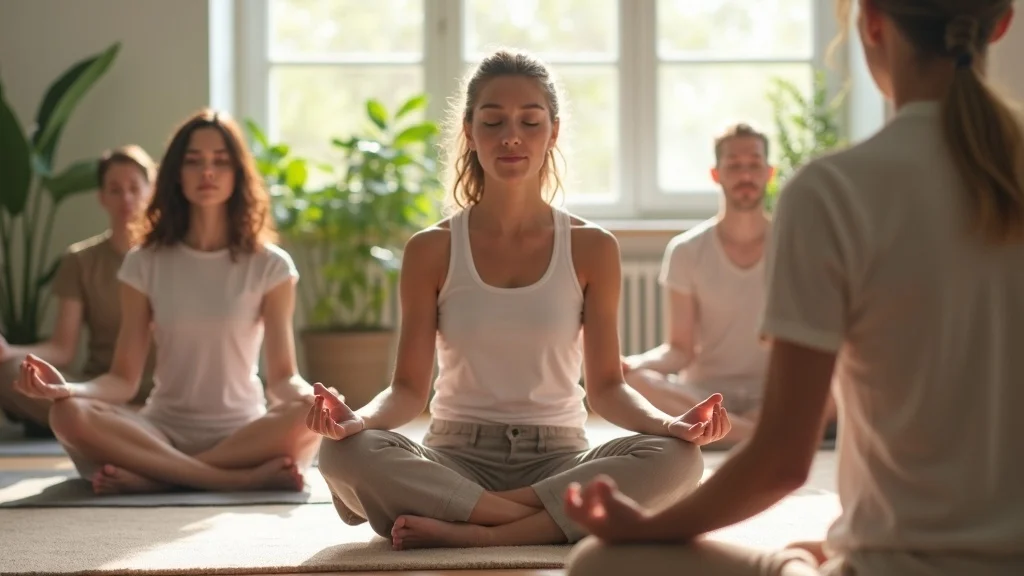
The beauty of sleep meditation is its versatility—there are multiple types of meditation techniques to fit your preferences and needs. Beyond guided meditation and body scan, you might find mindfulness meditation, progressive muscle relaxation, or mantra meditation beneficial. Mindfulness meditation centers around cultivating present-moment awareness: observing thoughts, sensations, and feelings with acceptance instead of judgment. For those drawn to repeated sound or phrases, mantra meditation can offer a rhythmic, soothing anchor for attention as you wind down at night.
Experiment with different meditation techniques to discover which resonates most. For some, a mix of body scan and mindfulness practice produces the deepest rest, while others appreciate guided meditation’s structure. The key is enjoying the process—view each session as an investment in sleep quality, mental health, and overall well-being. Consistency, above all, is what unlocks the greatest benefit and improved sleep foundation.
- Mindfulness meditation
- Guided meditation
- Body scan
- Progressive muscle relaxation
- Mantra meditation
How to Choose the Right Meditation Technique for You
When choosing the right meditation technique, begin by assessing your specific sleep struggles and personal preferences. If your mind races at night, mindfulness meditation or guided visualization may help disrupt negative thought loops. Physical restlessness or tension can be countered with body scan and progressive muscle relaxation. Try out a few techniques for at least a week before deciding which works best—it often takes repetition to feel the full effect.
Remember, the “right” meditation technique is whichever feels most comfortable and sustainable for you. If you’re a beginner, starting with short, guided meditations may be the easiest gateway; as you gain confidence, integrate other techniques and explore adjustments to fit your unique routine. No matter where you begin, sticking to the practice is the most critical step in improving your sleep and reaping lasting health benefits.
Mindfulness Meditation Tips: Staying Present for Better Sleep
Mindfulness meditation is a powerful way to break the cycle of ruminating thoughts and nighttime anxiety. This meditation practice focuses on staying anchored in the present without judging thoughts or feelings that arise. By bringing awareness to your breath, bodily sensations, and the environment—such as the softness of your sheets or the gentle rise and fall of your chest—you gently nudge your mind from restlessness into calm. Mindfulness practice before bed has shown to improve sleep quality, lower stress, and enhance overall mental health.
What sets mindfulness meditation apart is its accessibility and flexibility: you can practice sitting up, lying down, for a few minutes or a full half-hour. Even a short five-minute mindfulness meditation can interrupt cycles of anxiety that keep you awake and help you fall asleep faster. Consistent practice transforms your relationship with both your mind and body, serving as a foundation for lasting sleep improvements.
Step-by-Step Mindfulness Practice for Sleep
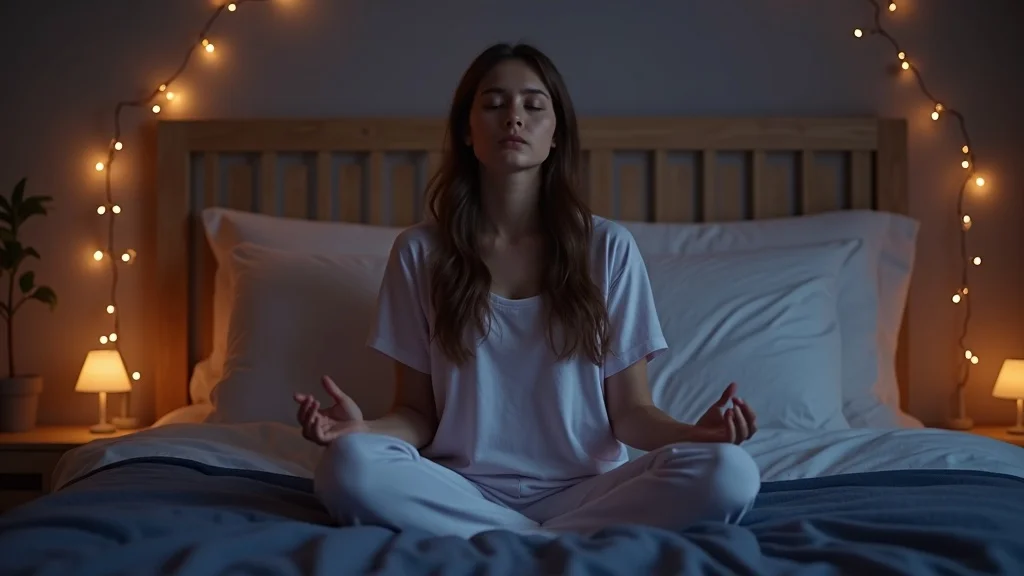
Start by finding a comfortable, undisturbed spot—ideally, your bed. Close your eyes and focus attention on your breath, feeling its natural ebb and flow. If your mind wanders, simply acknowledge the thoughts and bring awareness gently back to your breath or to the sensation of your body resting on the mattress. Spend several minutes observing without trying to change or judge anything that happens.
As you deepen your practice, try adding gentle gratitude or intention setting: for example, silently repeat, “I am safe. I am relaxed. I am ready for rest.” Practiced nightly, this mindfulness meditation will train your brain and body to associate bedtime with calm, making it easier to both fall asleep and improve sleep quality.
Common Mindfulness Meditation Mistakes to Avoid
A frequent error is expecting to banish all thoughts or fall asleep instantly through mindfulness meditation. The key is allowing thoughts to come and go without attachment or self-criticism. Another common pitfall is practicing too close to stimulating activities—be sure to disconnect from screens and reduce alert mental tasks before beginning meditation. Lastly, avoid inconsistency by carving out regular, non-negotiable time for mindfulness practice each night; even five minutes can make a difference when performed daily.
Success in mindfulness meditation for sleep is measured by the gradual reduction of nighttime anxiety, easier transition into sleep, and improved well-being overall. Treat mistakes as opportunities for growth, and remember—progress, not perfection, is the ultimate goal.
People Also Ask: Answers to Top Sleep Meditation Tips Questions
How to properly meditate for sleep?
To properly meditate for sleep, find a quiet space, settle into a comfortable position, and use a guided meditation, body scan, or breathing technique to calm the mind and relax the body, focusing on gentle awareness rather than forcing sleep.
What is the 15 minute sleep trick?
The 15 minute sleep trick generally refers to a combination of relaxation and meditation techniques, such as deep breathing, body scan, and progressive muscle relaxation, practiced for 15 minutes to help signal the brain and body that it’s time to sleep.
Is 10 minutes of meditation equal to 4 hours of sleep?
While 10 minutes of meditation can provide substantial restfulness and may help reduce stress, it is not a scientific substitute for 4 hours of sleep. However, meditation supports sleep quality and mental recovery.
What is the best trick to fall asleep quickly?
The most effective trick to fall asleep quickly is practicing deep breathing and progressive muscle relaxation, combined with a consistent nightly routine and minimizing stimulating activities before bed.
Expert Sleep Meditation Tips: Advanced Practices for Deeper Rest
Once you’ve mastered foundational sleep meditation tips, consider advanced strategies to further improve sleep. Using meditation apps can offer structure and motivation. Creating a dedicated sleep meditation environment—think comfortable lighting, supportive bedding, and calming scents—greatly enhances your meditation experience. Integrating soothing soundscapes or gentle aromatherapy, like lavender or chamomile, can reinforce the relaxation response. Finally, practice a digital detox at least 30 minutes before starting your meditation to remove distractions and signal your body it’s time for rest.
- Using meditation apps to improve sleep
- Creating a dedicated sleep meditation environment
- Integrating aromatherapy and soundscapes
- Practicing digital detox before meditation
| App Name | Key Features | User-Friendly? | Ideal For |
|---|---|---|---|
| Calm | Guided meditations, sleep stories, gentle music | Yes | Beginners & advanced users |
| Headspace | Mindfulness basics, sleep casts, progress tracking | Yes | All experience levels |
| Insight Timer | Wide range of free guided meditations, customizable timers | Moderate | Those wanting diverse options |
| Simple Habit | Quick sleep meditations, progress reminders, stress busters | Yes | Busy users |
FAQs About Sleep Meditation Tips
- Can sleep meditation replace medication for insomnia? Sleep meditation can greatly improve sleep quality and resolve mild sleep issues, but those with chronic insomnia should consult a healthcare provider before replacing medication.
- What is the best time to practice sleep meditation tips? The best time is 30–60 minutes before bedtime when you are winding down your day and ready to relax.
- Do meditation techniques help with anxiety-related sleep issues? Yes! Techniques such as guided meditation, mindfulness practice, and deep breathing all reduce anxiety and can dramatically improve sleep for those affected by stress or nervousness.

Key Takeaways from These Sleep Meditation Tips
- Consistent meditation practice can improve sleep
- Multiple meditation techniques offer personalized solutions
- Start small and build your nightly sleep meditation habit
Ready to Transform Your Sleep? Start Using Sleep Meditation Tips Tonight
There’s no better time to start than tonight. Try one or more of these sleep meditation tips, and you might just find yourself drifting into restful, restorative sleep faster than ever.
Conclusion
Start practicing sleep meditation tips every night to quiet your mind, improve sleep quality, and enjoy better health—one restful night at a time.
If you’re inspired to take your meditation journey even further, consider exploring how connecting with your higher self can enrich your nightly routine and overall sense of well-being. Delving into practices that foster deeper self-awareness not only supports restful sleep but also nurtures personal growth and clarity. Discover more about elevating your meditation experience and unlocking new levels of inner peace by visiting the connect with your higher self collection. Let your path to better sleep become a gateway to profound transformation and lasting serenity.
Sources
- https://www.sleepfoundation.org
- https://www.ncbi.nlm.nih.gov/pmc/articles/PMC6775457/
- https://www.psychologytoday.com/us/basics/meditation/meditation-sleep
- https://www.sleep.org/sleep-meditation/
Incorporating sleep meditation into your nightly routine can significantly enhance your sleep quality and overall well-being. For a comprehensive understanding of how meditation aids sleep, consider exploring the article “Can Meditation Help You Sleep? – Meditation Tips for Better Sleep,” which delves into various techniques and their benefits. (prevention.com) Additionally, the “Headspace Guide to Sleep” offers a seven-part series that explores the science behind healthy sleep and provides practical advice, including guided relaxations to prepare you for rest. (en.wikipedia.org) If you’re serious about improving your sleep through meditation, these resources will provide valuable insights and practical techniques to help you achieve restful nights.